Designing Dynamic Proposal Experiences for an Auditing Firm
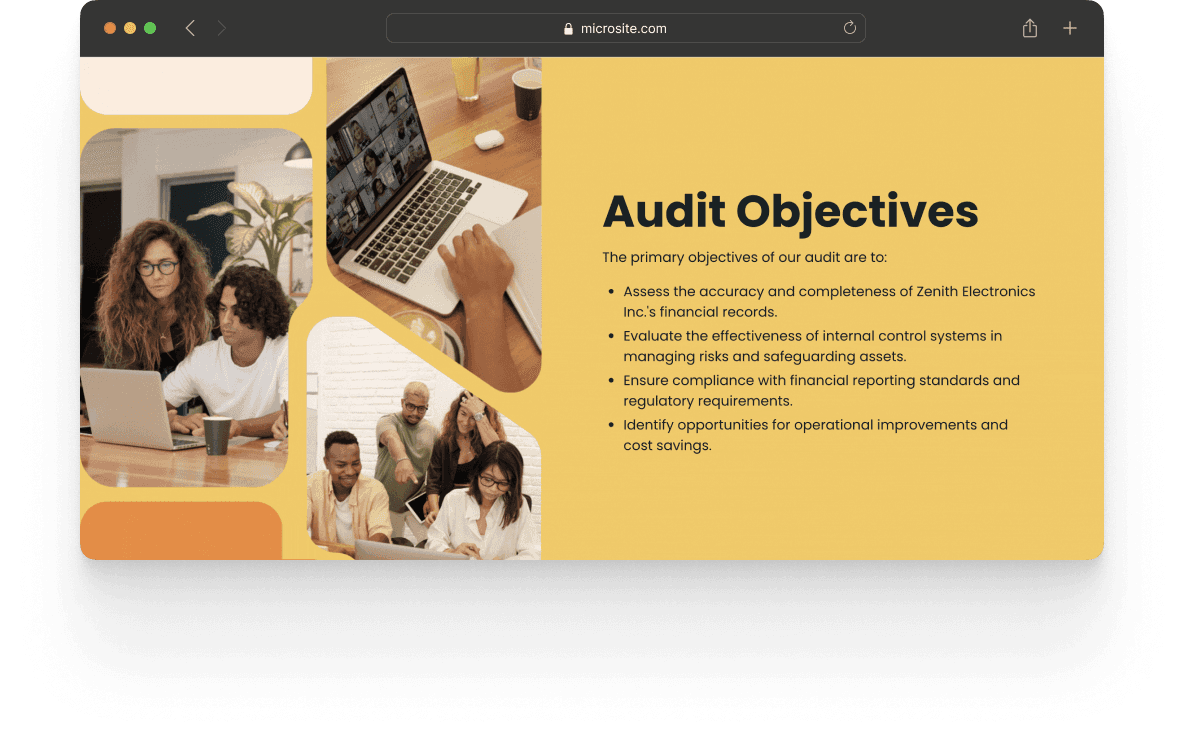
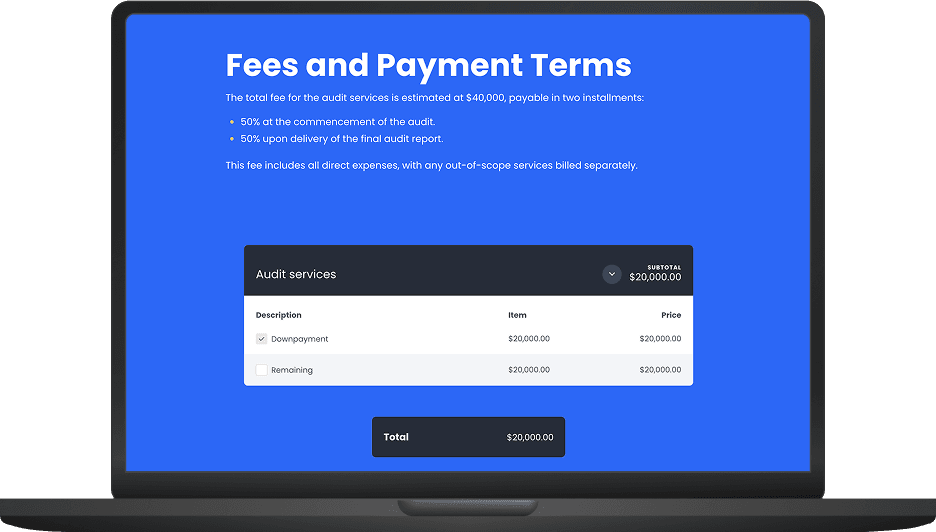
In a corporate world where first impressions matter, sending a plain PowerPoint just doesn't cut it anymore—especially when you're pitching to multimillion-dollar clients. At this Big Four auditing firm, we build dynamic, interactive proposal microsites using Zoomforth to help audit, advisory, and assurance teams stand out when vying for new business.

New York
1990
Finance
$1.578 billion (2024)
5,000+
Challenge
Audit and advisory proposals are often complex, text-heavy, and packed with legal language. While the content is essential, presenting it in a way that captures attention, builds trust, and clearly communicates value is equally important.
The internal teams, often non-designers, rely on our UX and design skills to transform their vision into reality. They come with a rough outline (sometimes just a Word doc), and it’s our job to turn it into a polished, interactive microsite—usually within tight deadlines ranging from 7 days to 3 months, depending on the size and complexity of the opportunity.
My Role
The Impact
These microsites became a secret weapon for our teams—turning static decks into immersive client experiences. We’ve seen increased engagement, better client feedback, and even early wins where the site helped tip the scales in our favor.
Some highlights:
Faster proposal delivery through efficient design systems.
Improved client perception with branded, modern, mobile-friendly experiences.
Greater collaboration between design, marketing, and client teams.
35%
Reduction in proposal turnaround time
50%
Increase in client engagement with proposals
40%
Boost in proposal win rate for microsite-based pitches




Process
1. Discovery & Content Review
We worked closely with proposal teams to gather content, understand their objectives, and get a feel for the tone they wanted to strike. Often, this meant asking the right questions to pull out the visual story hiding behind legal and financial text.
2. Wireframing
We used Adobe XD to quickly wireframe ideas—focusing on layout, navigation, and hierarchy. This helped us align fast and gave stakeholders a visual direction early in the process.
3. Visual Design & Build
Once approved, We moved into high-fidelity design and began building the site in Zoomforth. Given these tools function like no-code builders (similar to Wix), being able to think in terms of code and component-based design helped ensure scalability and clean structure.
4. Launch & Handoff
After rounds of review, the microsite would go live—sometimes even replacing traditional PDFs in client communications. We also provided support for future updates or handoff documentation when needed.
Why This Role Worked For Us
Creative Ownership: We loved turning abstract ideas into something visual and compelling.
Cross-Team Communication: Working with audit professionals meant we had to ask the right questions, clarify vague direction, and translate it all into something engaging.
Flexible Work Environment: It’s a fully remote role (except for a few office days each month), giving us room to focus and manage time effectively.