Designing a Literacy Assessment Tool for Young Readers

Created an gamified, voice-guided experience to help teachers remotely evaluate and support students struggling with reading fundamentals.

Headquarters

Headquarters

Kingston, Jamaica

Founded

Founded

2012

Industry

Industry

Edtech

Revenue

Revenue

$600,000usd (2024)

Company size

Company size

20+

Challenge

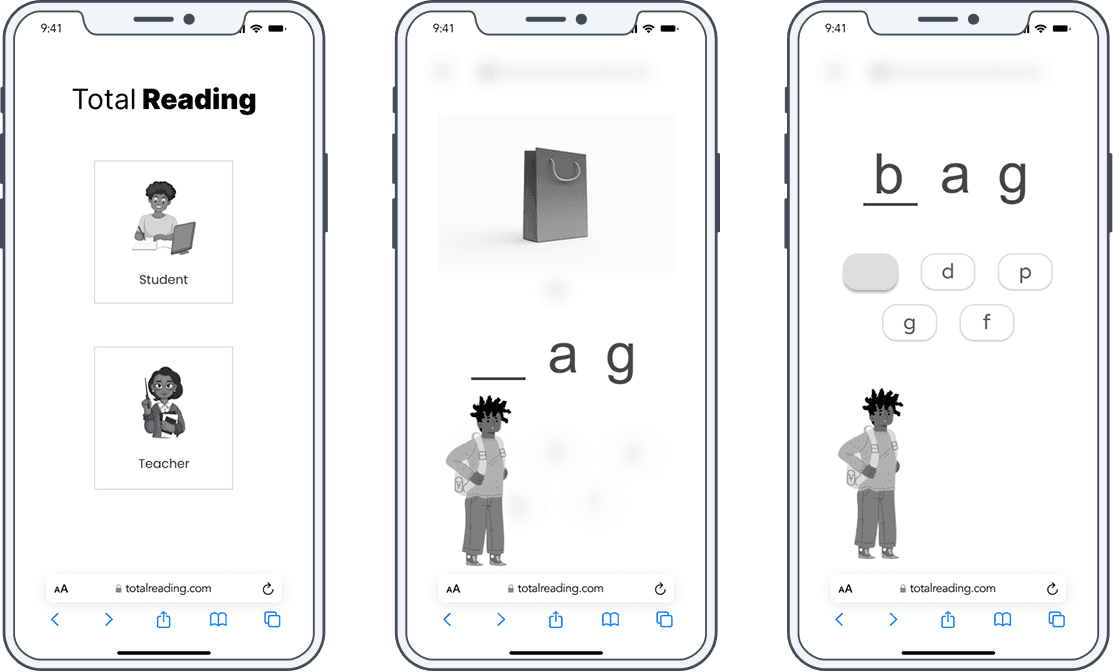
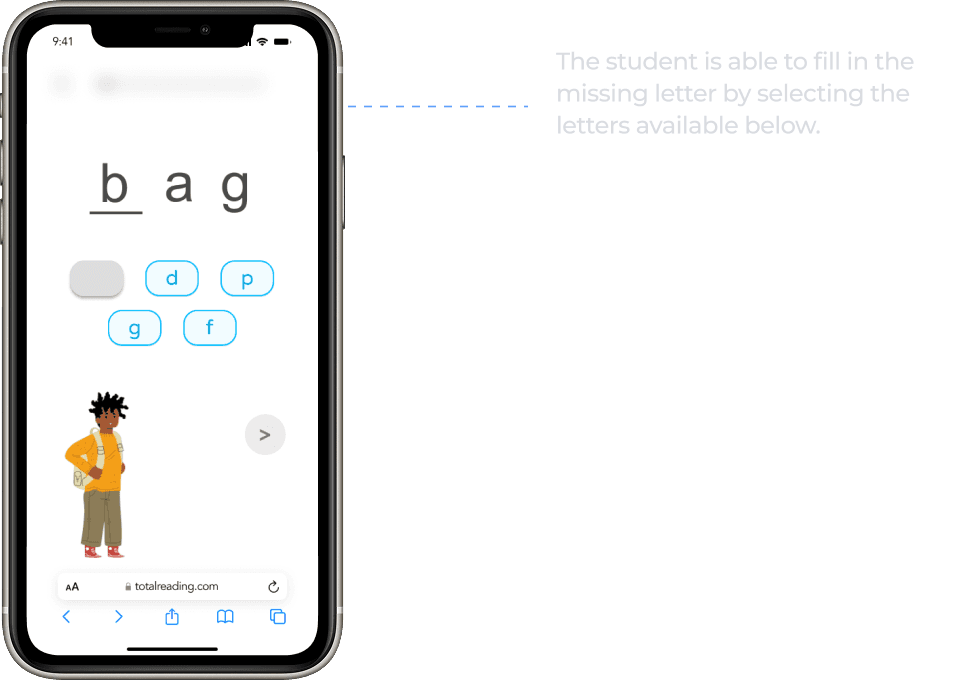
Many primary school students struggle with literacy, which impacts their academic progress and future opportunities. Teachers face challenges in assessing these students' reading abilities effectively, especially in remote or resource-constrained environments. A tool is needed to provide an interactive, engaging, and accurate way for teachers to assess and support struggling readers. Total Reading is an educational testing tool designed to help teachers remotely assess the literacy levels of primary school students who struggle to read. The app guides students through the foundational principles of reading—such as phonemes, vowel blends, and word recognition—using pictures and voiceovers to ensure an engaging and accessible experience.

Goals

  • Create a user-friendly tool that enables teachers to assess students' literacy levels remotely.

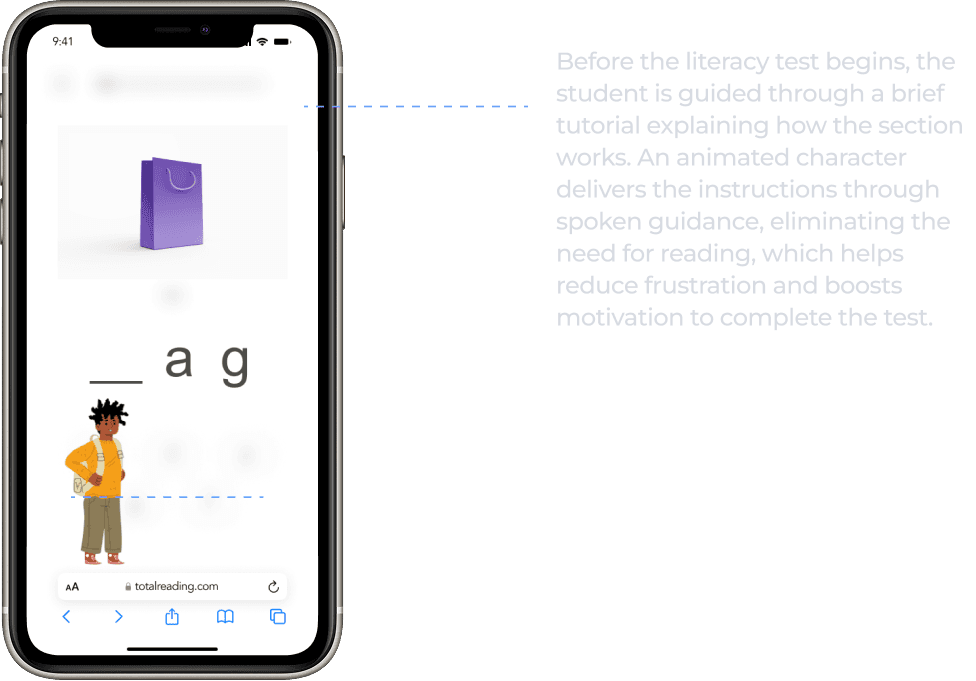
  • Ensure the tool is engaging and accessible for students with limited reading skills by incorporating pictures, voiceovers, and interactive elements.

  • Provide teachers with actionable insights and results to guide personalised intervention strategies.

  • Support foundational literacy development through a structured, gamified learning experience.

Results

Our quantitative research revealed several key insights about how students and teachers engaged with the Total Reading app. Approximately 72% of students were able to complete the reading tasks independently, without requiring teacher intervention. However, only 48% completed an assessment within the expected 10-minute timeframe, indicating potential areas for streamlining. Additionally, 31% of students needed multiple attempts for phoneme recognition, highlighting a challenge in that specific task. On a positive note, 84% of teachers rated the app as highly effective for conducting remote literacy assessments. Furthermore, 67% of students consistently used the voiceover feature, demonstrating its importance in supporting early readers through the experience.

72%

Engagement Rate

10mins

Task Completion Time

67%

Voiceover Usage

Stack

Process

We used an iterative design process, starting with discovery research to understand the needs of both teachers and struggling readers. Following an agile methodology, we conducted user testing alongside development to continuously refine the tool based on feedback.
Target Audience

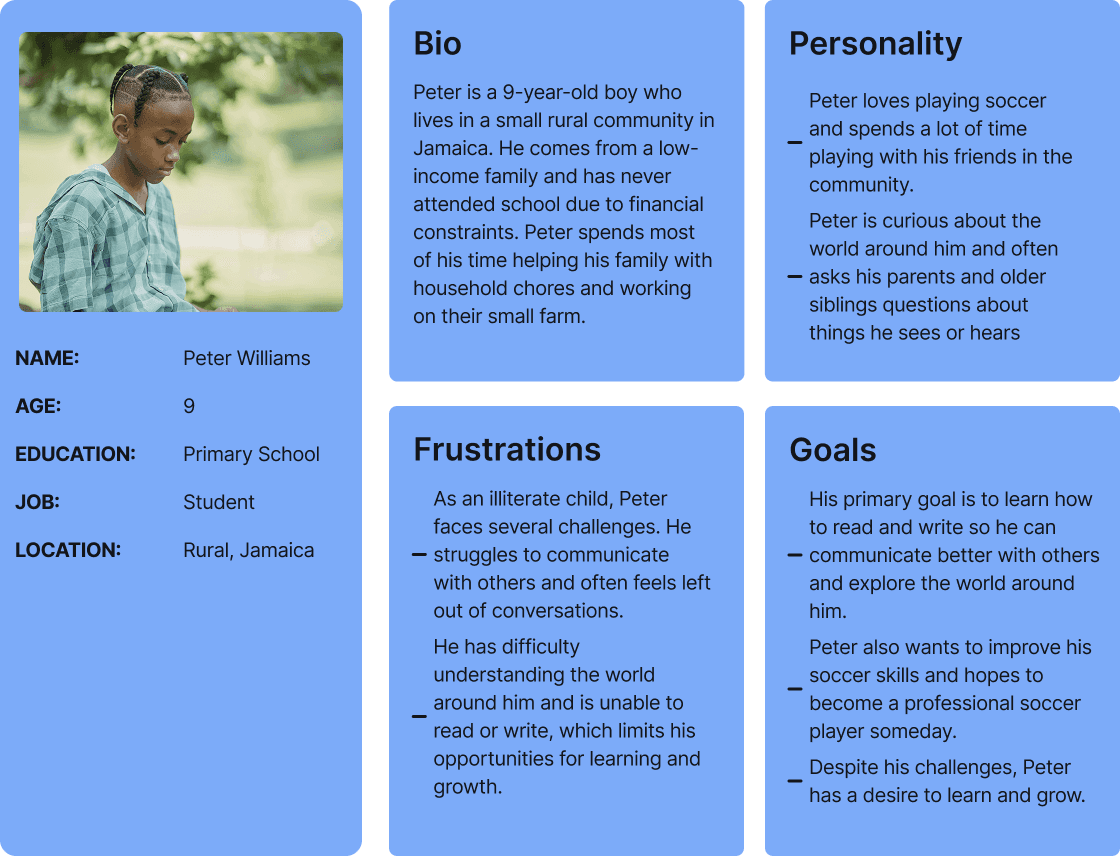
The target audience includes primary school students struggling with literacy, particularly those in grades 1-6, and teachers who need a reliable tool to assess and address reading challenges.

Competitors Analysis

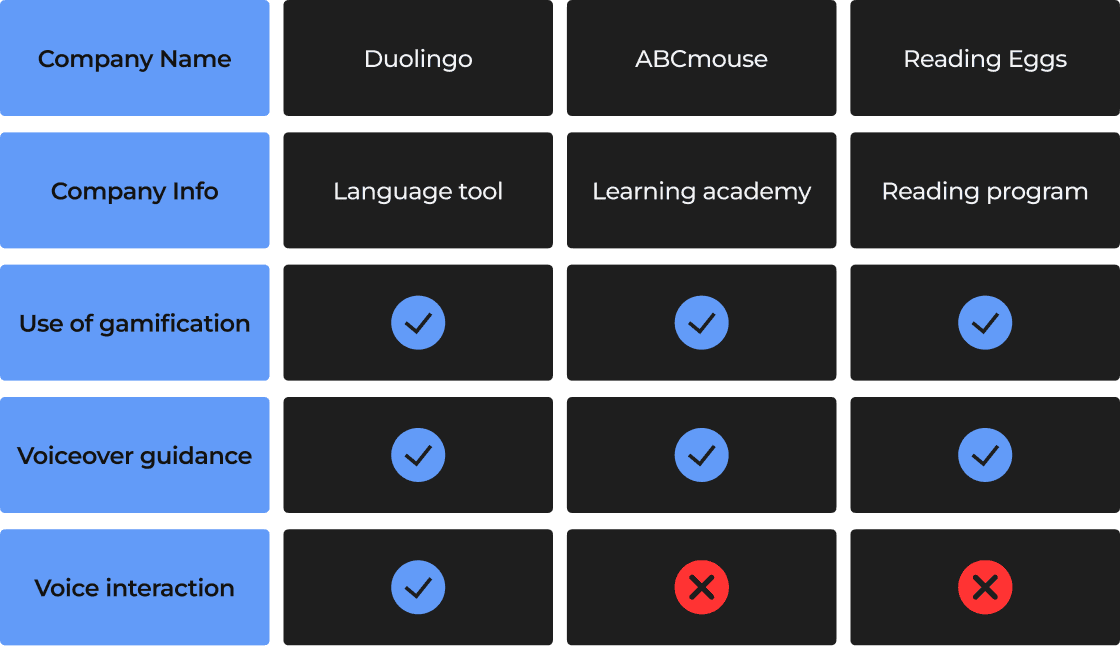
Competitive analysis involved evaluating EdTech tools like Duolingo, ABCmouse, and Reading Eggs. We analyzed their use of gamification, voiceover guidance, and interactive features for non-readers. Screenshots and workflows were categorized into themes such as ease of use, student engagement, and voice-interaction functionality to benchmark and identify gaps.

Primary Persona

Target Audience

The target audience includes primary school students struggling with literacy, particularly those in grades 1-6, and teachers who need a reliable tool to assess and address reading challenges.

Primary Persona

Competitors Analysis

Competitive analysis involved evaluating EdTech tools like Duolingo, ABCmouse, and Reading Eggs. We analyzed their use of gamification, voiceover guidance, and interactive features for non-readers. Screenshots and workflows were categorized into themes such as ease of use, student engagement, and voice-interaction functionality to benchmark and identify gaps.

Competitors Analysis

Competitive analysis involved evaluating EdTech tools like Duolingo, ABCmouse, and Reading Eggs. We analyzed their use of gamification, voiceover guidance, and interactive features for non-readers. Screenshots and workflows were categorized into themes such as ease of use, student engagement, and voice-interaction functionality to benchmark and identify gaps.

High Fidelity

High Fidelity

Key Takeaways

  • Engaging, Student-Centric Design: Gamification and voiceover guidance are essential for making literacy assessments engaging and accessible for struggling readers.

  • Actionable Teacher Insights: The app provides teachers with clear and meaningful results, enabling targeted literacy interventions.

  • Iterative Design is Critical: Regular user testing and feedback loops ensured the app met the needs of both teachers and students effectively.

  • Accessibility is a Priority: Designing for students with limited literacy skills required innovative solutions like picture aids and intuitive voice interactions.

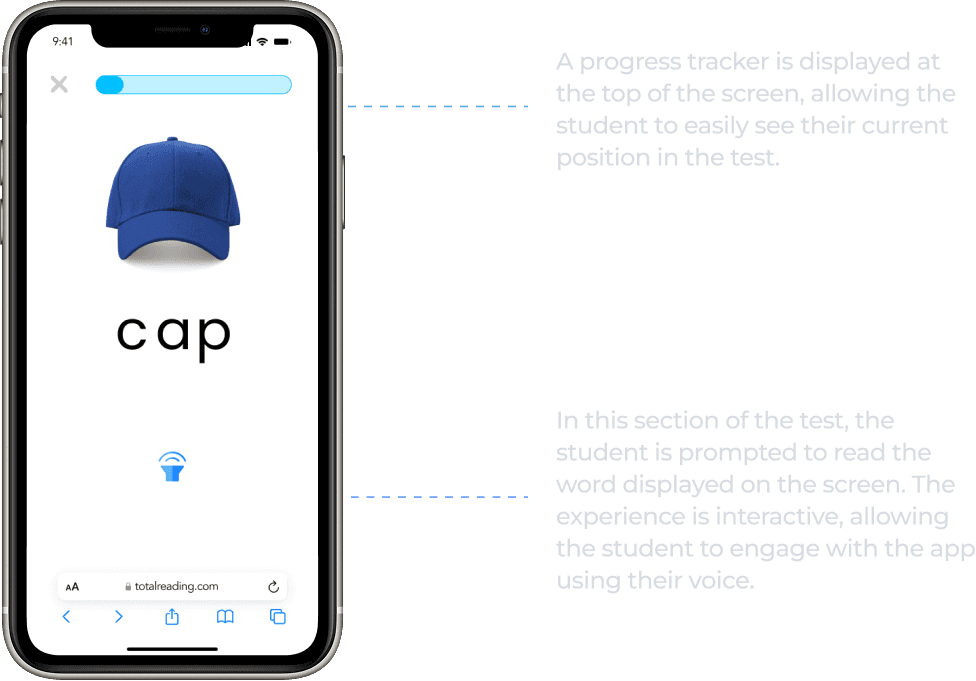
  • User-Centered Design Enhancements: By implementing features like a progress tracker and a conversational tone, we improve user engagement and reduce onboarding friction, making the process more intuitive and friendly.

  • Efficient Onboarding Flow: Streamlining the onboarding flow to complete within 15 minutes and including features like instant product recommendations aligns with customer needs for a fast and personalised experience.

  • Importance of Personalised Communication: Customised messaging and product suggestions help users feel understood and valued, increasing satisfaction and retention rates.

  • Continuous Guidance and Support: Real-time assistance tools, such as FAQs and live chat, address user pain points effectively, reducing drop-off rates by helping users navigate the application smoothly.

  • Data-Driven Decisions: The project used insights from quantitative and qualitative research to identify user pain points and prioritize features, ensuring that design choices directly address real user needs and behaviors.